POWDER COAT LINES
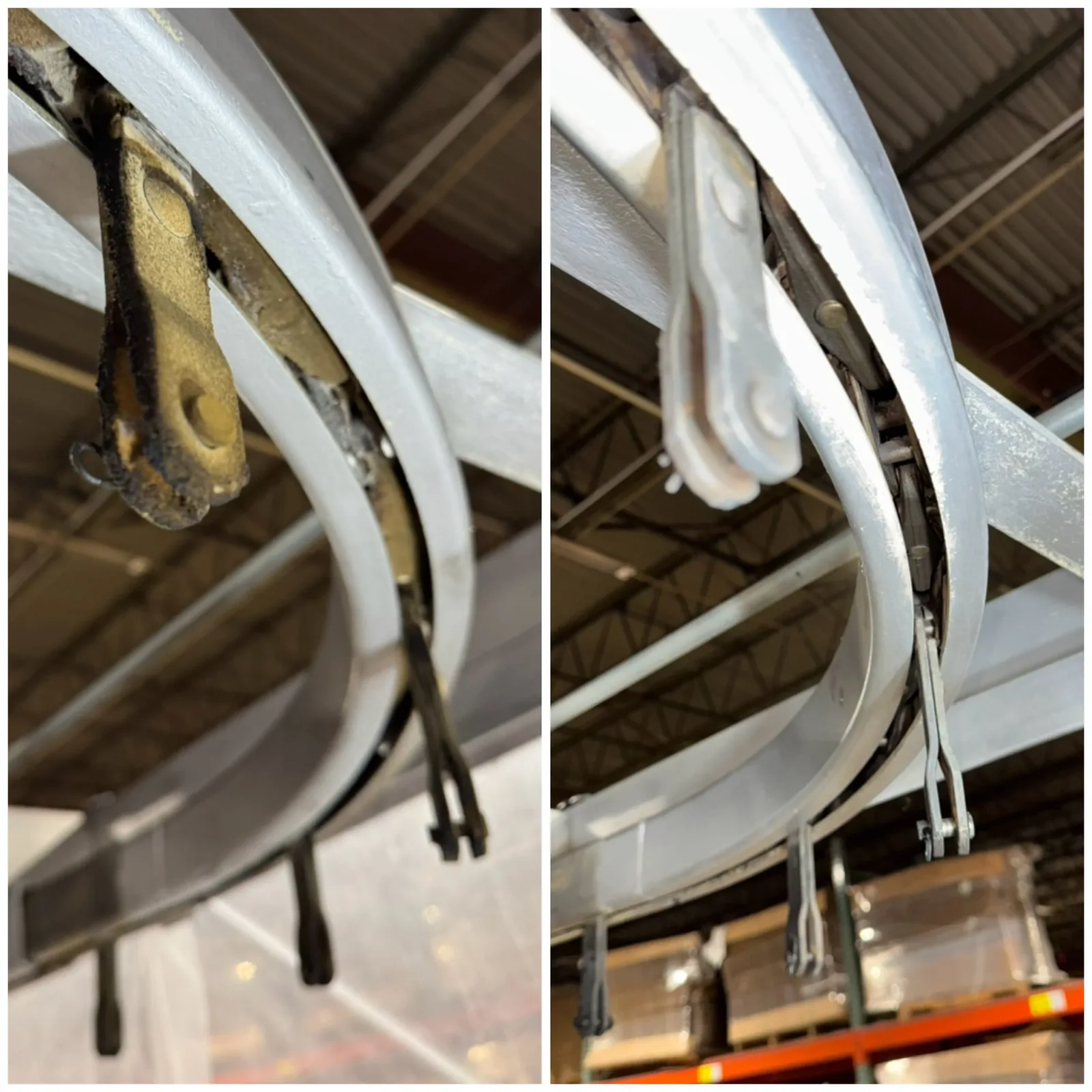
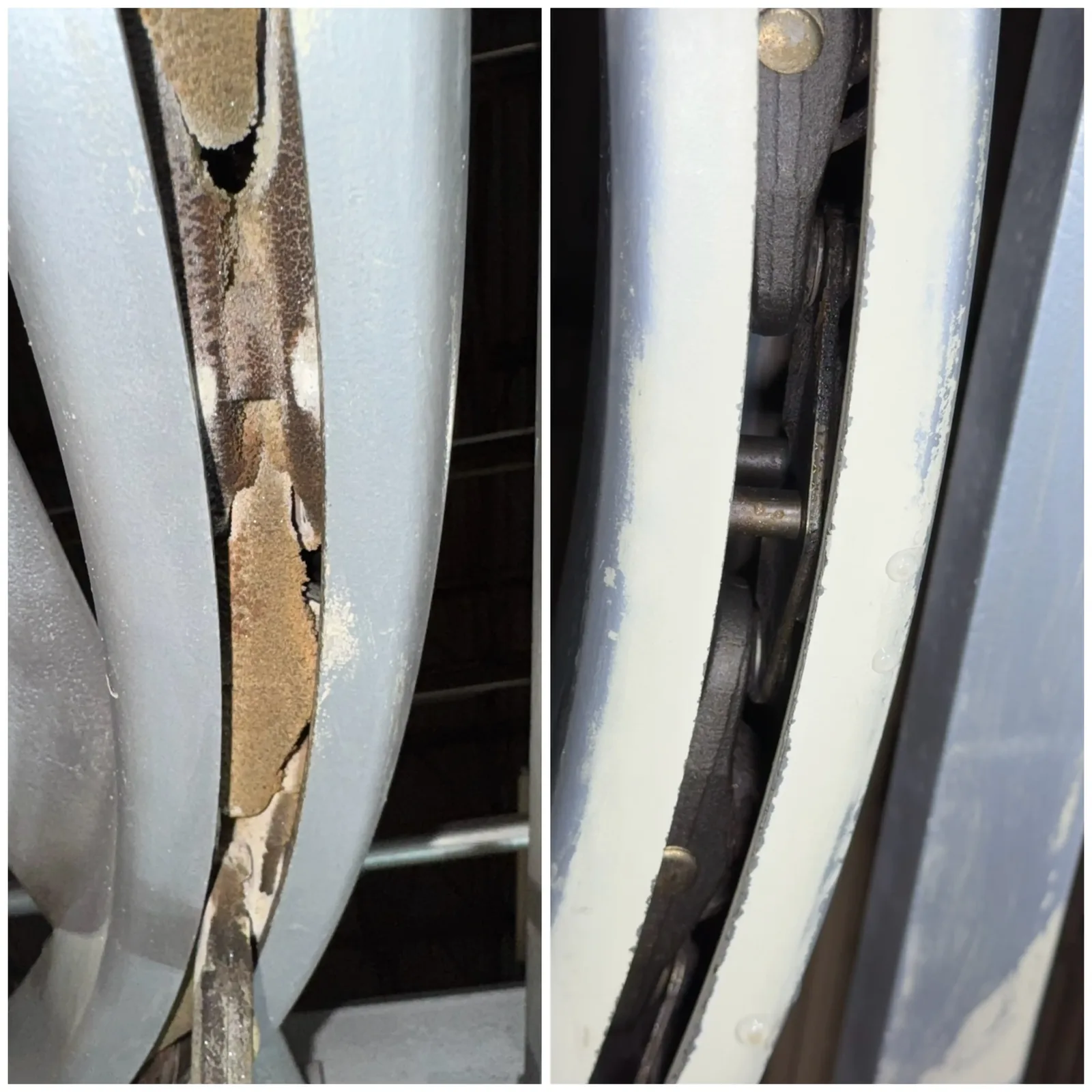
Powder sticks to the part because the part is grounded. Every layer of cured overspray on a hook, hanger, or chain link adds resistance to that path. When grounding degrades, transfer efficiency drops — more powder ends up on the floor instead of the part, and finish quality slips. The line keeps running the whole time, which is why this usually goes unnoticed until someone questions the powder budget.
What we clean
Hooks, hangers, and racks. Conveyor chain and trolleys. Booth walls, floors, and recovery equipment. Cure oven interiors.
Contamination considerations
Cured powder is an insulator, and it accumulates a layer per cycle. There is no failure point — just a gradual rise in powder consumption and reject rate that is easy to attribute to something else. Burn-off ovens and chemical stripping do the job, but take fixtures out of service and can warp or embrittle them over repeated cycles.
Why dry ice, and why not
No water, no stripping tank, no thermal cycling of your fixtures. Blasting removes cured powder down to bare metal and restores the fixtures to the resistance and conductivity the line was designed around. However: severely built-up fixtures take multiple passes, and at extreme accumulation burn-off is still the more economical option. We run parameters we have already proven on this equipment — not a generic approach.
Powder that doesn't reach the part is powder you bought, then swept up.