PRODUCTION EQUIPMENT
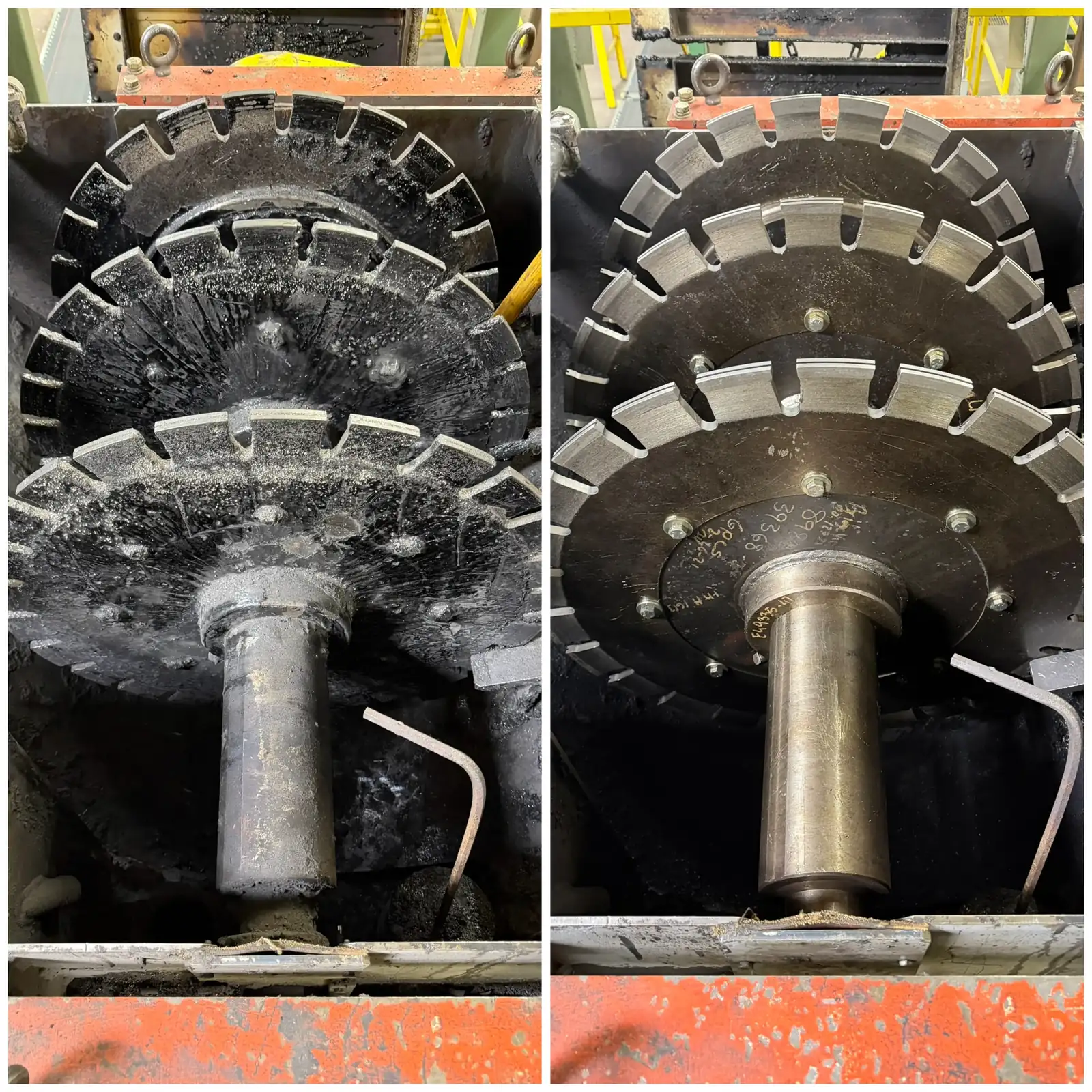
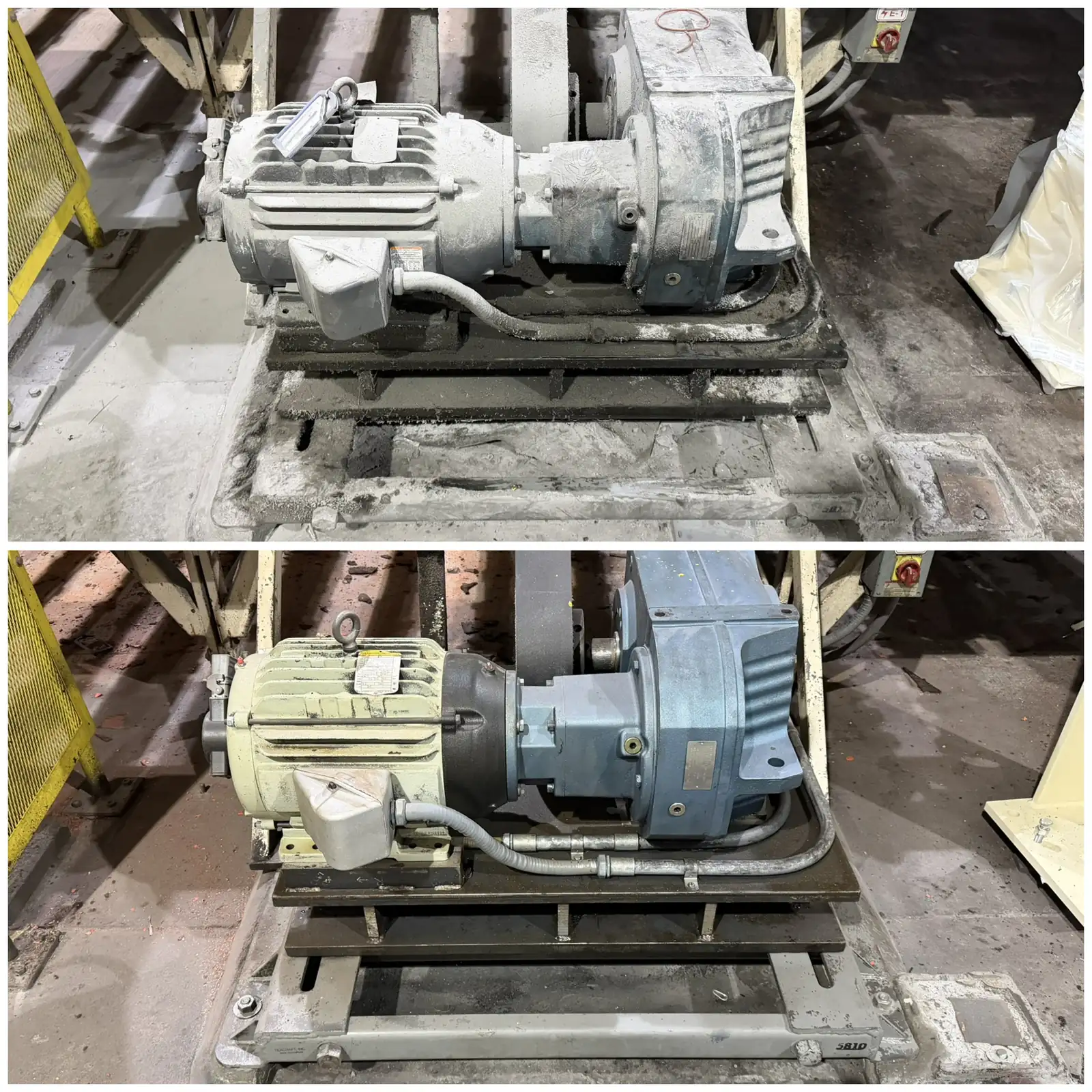
Grease, carbon, and process residue build up on equipment that runs continuously. The real cost isn't the buildup — it's that maintenance can't see through it. A leaking seal, a failing bearing, a hairline crack: all invisible under a quarter inch of accumulated grime. Most of this work fits inside a planned shutdown.
What we clean
Rollers, carrier bearings, conveyors, and drive assemblies. Batch mixers. Mold presses and the molds themselves, including burnt-on plastic. Asphalt applicators and material tubs. Electric motors and gearboxes.
Contamination considerations
Buildup on an electric motor acts as insulation. The motor runs hotter, draws more current, and costs more to operate every hour it's on — a problem that shows up on the power bill long before it shows up as a failure. Burnt plastic bonds to mold surfaces and hardens with each cycle. Asphalt and resin behave the same way on applicators and tubs. Heavy wet grease smears under blasting rather than releasing, so that comes off mechanically first.
Why dry ice, and why not
No water means motors, bearings, and electrical components stay dry with no drying window before restart. Molds and tooling get cleaned in place — no disassembly, and no blast media left in the cavity to end up in the next part. However: dry ice handles carbon, burnt plastic, and dry residue far better than heavy grease, and improper pressure can damage seals, wiring insulation, and soft tooling surfaces. We run parameters we have already proven on this equipment — not a generic approach.
Clean equipment isn't the goal. Equipment your maintenance team can actually inspect is.